






A traditional coat is usually chosen for coverage. A blazer is chosen for shape. A leather blazer sits between those two ideas: it has the familiar structure of tailored clothing, but the material gives it more presence than a conventional wool or cotton jacket. Worn over a fine knit, shirt or simple top, it can make an everyday outfit feel considered without requiring a full suit or a formal occasion.
That does not make a leather blazer a replacement for every coat. Its usefulness depends on the weather, the weight of the leather, the fit and how much time you spend outdoors. It is best understood as a versatile outer layer for cool, mostly dry conditions and for situations where you want a sharper silhouette than a casual bomber or moto jacket provides.
For Fall and Winter 2026, leather outerwear is appearing in a range of proportions, from relaxed bombers to elongated and more tailored shapes. A blazer offers a quieter route into the look: less sporty than a bomber, less overtly rugged than a biker jacket, and easier to combine with tailored trousers or smart-casual clothing.
What makes a leather blazer different?
A leather blazer borrows its outline from a tailored blazer. Typical details include a notch lapel, a front button closure, shaped shoulders, a defined body and pockets arranged like those on a suit jacket. The leather changes the way those familiar details read: the result can feel more relaxed than formal tailoring, but more polished than many casual leather jackets.
A leather blazer is also different from a leather coat. A coat is generally designed to provide more coverage and often has room for substantial layers. A blazer is usually shorter and more shaped. It may be suitable for a cool commute or an evening out, but it should not be expected to provide the insulation or weather protection of a winter coat unless its construction specifically supports that use.
The distinction matters when shopping. If you want warmth and coverage first, compare coats, shearling and insulated outerwear. If you want a structured layer that works with denim, trousers and smart-casual outfits, a leather blazer may be the more useful choice.
Why choose a leather blazer instead of a traditional coat?
1. It gives casual outfits a more tailored finish
A leather blazer can bring structure to clothes that would otherwise look very relaxed. Wear it over a plain T-shirt and dark jeans, or layer it over a fine-gauge sweater with straight-leg trousers. The lapels and button front make the outfit look intentional, while the leather keeps it from feeling like office suiting.
2. It moves between smart and casual settings
A wool blazer can look formal, while a bomber or biker jacket usually signals a more casual style. A leather blazer occupies useful middle ground. It can work for dinner, a creative workplace, a city event or a weekend outfit, provided the setting does not require formal business attire and the garment is styled appropriately.
3. It adds texture without relying on a loud design
Leather has a visual depth that can make a simple outfit more interesting. A clean blazer with restrained hardware lets the material and silhouette do the work. That is useful if you prefer a wardrobe built around neutral colours and straightforward pieces rather than prominent logos or heavy embellishment.
4. It can be worn across more than one season
In autumn and spring, a leather blazer can be a practical top layer over a shirt or light knit. During milder winter days, it can work with a warmer layer underneath if the fit allows. In warmer weather, it may be too heavy for daytime use, so its year-round value depends on local climate and personal comfort.
5. It offers a different option from the usual leather jacket
If your wardrobe already includes a bomber, moto or varsity jacket, a blazer changes the silhouette rather than repeating the same look. The lapel and button front make it easier to pair with tailored pieces, while the leather gives it a more distinctive character than a standard fabric blazer.
How to choose the right leather blazer
Start with the silhouette
Look at the shoulder line, body length and waist shape. A structured blazer should sit cleanly at the shoulders without pulling across the back. The front should close without strain, and the hem should work with the rise of your trousers. A slightly relaxed shape gives more room for layering; a closer cut creates a sharper, more traditional blazer profile.
Do not assume that a leather blazer should fit exactly like a suit jacket. Leather has less forgiving movement than many woven fabrics, and the lining and construction affect how it feels. Try sitting, reaching forward and crossing your arms. If the jacket pulls sharply at the chest or armholes, sizing up or choosing another cut may be more sensible.
Check the leather and its weight
The product description should identify the material clearly. Leather weight and suppleness influence how the blazer hangs. Softer leather may drape more naturally, while a firmer construction can hold a more defined shape. Neither is automatically better; consider whether you want a relaxed layer or a more structured jacket.
A blazer that is too heavy may feel cumbersome indoors, while one that is too light for its construction may not hold the tailored shape you want. When the product page does not state a weight or leather type, ask the retailer rather than guessing from photographs.
Look closely at the tailoring details
Check that the lapels sit flat, the button closure aligns, the sleeves fall naturally and the pockets are positioned evenly. Inspect the stitching around the collar, shoulders, armholes and pocket openings. Open the jacket and look at the lining: it should sit smoothly and should not twist or pull when the blazer is worn.
A leather blazer is still a tailored garment. Its success depends on the relationship between the pattern, the leather and the way the jacket is assembled. A strong product photograph can show the silhouette, but fit information and clear construction details are just as important.
Choose a colour that fits your wardrobe
Black is the easiest starting point if you wear monochrome outfits, dark denim, grey trousers or crisp white shirts. Cognac and brown tones feel warmer and work naturally with cream, beige, navy, olive and denim. Deep burgundy can add colour while remaining relatively easy to style with charcoal, black and dark blue.
Before buying, think of three outfits you could wear it with immediately. If it works only with one pair of trousers or one particular shirt, it may be less versatile than it first appears.
How to style a leather blazer
With jeans and a T-shirt
This is the simplest way to make a leather blazer feel relaxed. Choose dark or mid-wash straight-leg denim, a plain T-shirt and clean shoes. The blazer supplies the structure, so the rest of the outfit can stay uncomplicated. If the jacket is cognac, try a white, cream or charcoal T-shirt; with black leather, grey, white and muted colours are easy options.
With tailored trousers
Pairing leather with tailored trousers creates a smart-casual outfit that does not look like a conventional suit. A fine knit, open-collar shirt or simple crew neck works underneath. Keep the trouser cut clean and let the blazer provide the contrast in texture.
Over a shirt
A button-down shirt gives the leather blazer a sharper direction. For a relaxed look, leave the top button open and wear it with dark denim. For a more polished outfit, choose a plain shirt and tailored trousers. Avoid adding too many competing details: the leather and lapels already provide visual interest.
With knitwear in colder weather
A fine-gauge sweater or lightweight merino knit is generally easier to layer beneath a shaped blazer than a bulky cable knit. Make sure the armholes and chest allow movement. If you need a thick sweater to stay warm, a roomier coat may be more practical than forcing the layers under a close-fitting blazer.
For an evening outfit
A leather blazer works well over a dark shirt, a simple top or a minimal dress. Keep the rest of the look relatively clean and use footwear or one accessory to set the tone. A black blazer can feel understated; a cognac version can bring warmth to a dark outfit.
For women: balancing structure and softness
A leather blazer can be worn with a slip dress, a fluid skirt or wide-leg trousers. The contrast between the tailored shoulders and softer fabric keeps the outfit from feeling overly formal. If the blazer is oversized, keep one part of the outfit more fitted or define the waist elsewhere. With a closer-fitting blazer, a fuller skirt or relaxed trouser can create balance.
For men: using the blazer beyond office-style outfits
Try it with dark denim, a fine knit polo, a plain crew neck or a casual button-down. The aim is not to recreate a business suit in leather. A relaxed trouser, understated shoe and simple base layer help the jacket feel appropriate for everyday wear.
Can a leather blazer replace a winter coat?
Not in every situation. A leather blazer usually offers less coverage than a long coat and may not have insulation designed for cold weather. Its warmth depends on the leather, lining, fit and the layers worn underneath. It can be useful on cool days, for short outdoor journeys or when most of the day will be spent indoors.
For freezing temperatures, strong wind, heavy rain or long periods outdoors, choose a coat designed for those conditions. A leather blazer should not be assumed to be waterproof or insulated just because it is made from leather. Check the specific product information and care instructions.
A practical wardrobe can include both: a leather blazer for tailored, transitional outfits and a proper winter coat for days when warmth and coverage matter more than silhouette.
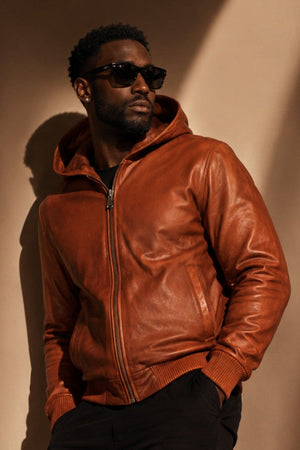
Leather blazer versus other leather jacket styles
|
Leather blazer |
Tailored outline, lapels and button front; best for smart-casual outfits and polished layering. |
|
Leather bomber |
Usually more relaxed, often with ribbed cuffs and hem; better for casual outfits and sporty proportions. |
|
Moto or biker jacket |
Distinctive zip front and often more hardware; gives an outfit a stronger, more rugged edge. |
|
Leather coat |
Longer coverage and often more room for layering; a more practical direction when warmth and protection are priorities. |
|
Leather trench |
Long, coat-like silhouette with a more dramatic tailored shape; useful when you want a statement outer layer. |
A closer look at Daniel’s Leather NYC’s Leather Blazer
Daniel’s Leather NYC currently lists a product named Leather Blazer in its men’s collection. The product page describes it as 100% genuine leather, in cognac, with a structured silhouette, classic notch lapel and two-button front closure. It also lists a satin lining, flap front pockets, a welt chest pocket and an interior pocket. The listed product price at the time of research was $399; prices, sizes and availability can change, so confirm the live page before publishing or purchasing.
The product page says most jackets fit true to size and asks customers to consult the size chart. It also invites customers to provide height and weight at checkout so the team can review sizing. For a tailored leather garment, compare the garment measurements with a blazer you already own and contact the team if you are between sizes or plan to layer.
The current listing is presented within the men’s collection. Do not describe it as a dedicated women’s leather blazer or imply that multiple blazer colours or cuts are available unless the live catalogue confirms those options. Customers interested in a different fit should ask the store about current availability and custom sizing.
· Leather Blazer product page: https://dl-nyc.com/products/leather-blazer
· Men’s Leather Collection: https://dl-nyc.com/collections/mens-leather
· Daniel’s Leather NYC FAQs and fit guidance: https://dl-nyc.com/pages/faqs
Care and storage
The product page advises keeping the leather dry, storing the blazer on a wide hanger in a breathable garment bag, and avoiding heat and prolonged sunlight. It recommends professional leather cleaning. Follow the care guidance for the exact garment and avoid household cleaners or products that have not been confirmed as suitable for its finish.
Use a broad hanger that supports the shoulders, allow the blazer to air after wearing and avoid compressing it under heavy clothing. If it becomes wet, let it dry naturally away from direct heat. For stains or changes to the finish, ask a leather-care professional before attempting treatment.
Frequently asked questions
Are leather blazers in style for 2026?
Leather outerwear remains prominent in Fall/Winter 2026 coverage, with designers and street style showing a range of shapes from relaxed jackets to longer, more tailored silhouettes. A leather blazer is a more polished way to wear the material, although it is one option rather than the only defining trend.
What do you wear with a leather blazer?
Wear it with dark jeans and a T-shirt for a relaxed outfit, tailored trousers and a fine knit for smart-casual dressing, or a simple dress for an evening look. Keep the base layers relatively clean so the blazer’s shape and leather remain the focus.
Can a leather blazer be worn casually?
Yes. Denim, plain T-shirts, knit polos and simple sneakers or boots can make a leather blazer feel less formal. The contrast between tailored lapels and casual basics is part of its appeal.
Is a leather blazer warm enough for winter?
It depends on the leather, lining, fit and layers underneath. Most blazer shapes provide less coverage than a long winter coat, so they are better for cool or milder days than prolonged exposure to freezing temperatures.
Is a leather blazer better than a leather jacket?
Neither is universally better. A blazer has a tailored, polished outline and works well with trousers and smart-casual clothing. A bomber or moto jacket usually feels more relaxed or rugged. Choose according to the outfits and occasions you need it for.
Should a leather blazer fit tight or loose?
It should sit cleanly at the shoulders and close without pulling across the chest or back. Leave enough room for the layers you plan to wear underneath. Avoid sizing so tightly that movement is restricted, because leather will not behave like a stretch fabric.
Can you wear a leather blazer to work?
It can work in creative or smart-casual workplaces when the dress code allows leather outerwear. For conservative business settings or formal meetings, a traditional tailored blazer may be more appropriate.
Can women wear a leather blazer?
Yes. It can be styled with dresses, skirts, denim or tailored trousers. The key is choosing a cut and length that work with the rest of the outfit. Check the retailer’s sizing and product range rather than assuming a men’s model will fit the same way.
What is the difference between a leather blazer and a leather coat?
A leather blazer is usually shorter and more shaped, with lapels and a button front. A leather coat is generally longer and offers more coverage, often with greater room for layering.
How do you care for a leather blazer?
Follow the care instructions for its specific leather and finish. Daniel’s Leather’s product page advises keeping the blazer dry, storing it on a wide hanger in a breathable garment bag, avoiding heat and prolonged sunlight, and using professional leather cleaning.
A tailored layer, not a one-coat solution
A leather blazer earns its place when you want the structure of tailoring with the texture and character of leather. It can sharpen denim, bring definition to knitwear and give smart-casual outfits a different point of view. Its limits are just as important: it is not automatically insulated, waterproof or suitable for the coldest days.
Choose one for the way you actually dress. Check the fit through the shoulders and chest, understand the leather and lining, and make sure the silhouette works with clothes you already own. Used in the right conditions, a leather blazer can become one of the most adaptable pieces in a cool-weather wardrobe.